
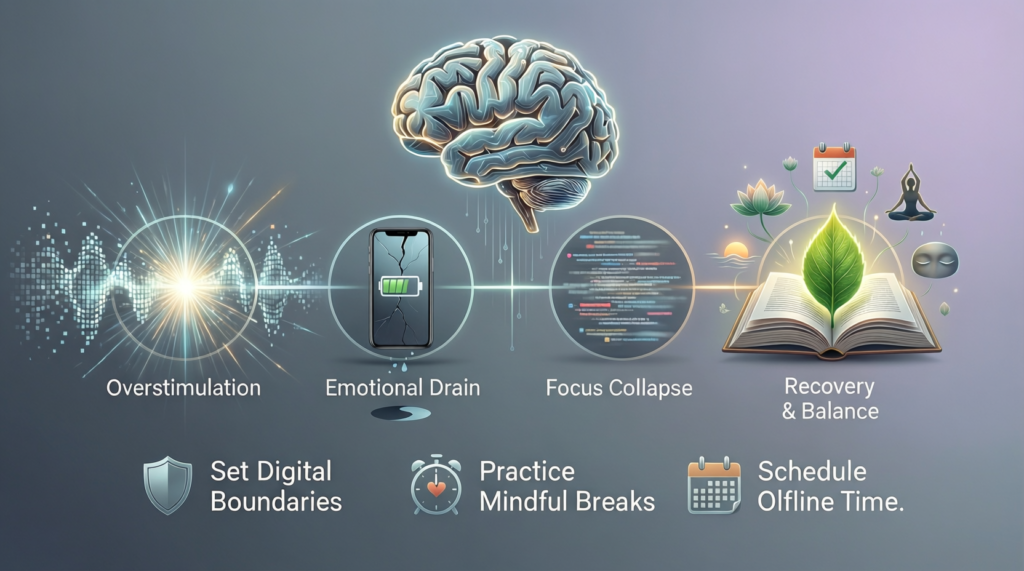
Why Digital Burnout Feels So Common
Digital burnout is the drained, wired feeling that shows up after too much screen time and constant switching between apps, messages, and tasks. It can affect mood, sleep, and focus, even when the content is not stressful.
Unlike classic work burnout, digital burnout can follow someone from morning alarms to late-night scrolling. The goal is not to quit technology, but to use it in ways that leave room for recovery.
In Short: Digital burnout gets better when input (what comes in), boundaries (when it happens), and recovery (what refills energy) are planned. Small changes add up faster than one big “detox.”
Spot the Patterns Behind the Fatigue
Start by noticing when the exhaustion hits: after meetings, after social media, or after late-night streaming. Patterns point to the easiest lever to change first.
Next, pick one clear goal for the week, such as fewer notifications, a calmer bedtime routine, or longer breaks between online sessions. A single goal is easier to keep than a long list of rules.
A quick check is to track three signals—sleep quality, irritation level, and ability to focus—at the end of each day. If two of the three worsen on high-screen days, the problem is likely overload rather than lack of motivation.
Create a Calmer Digital Wind-Down
Evening screen time often feels relaxing, but fast content can keep the brain alert long after the device is put away. A better wind-down uses slower, predictable activities and a clear stop time.
A planned break works best when it is short, enjoyable, and easy to end. For anyone who likes sweepstakes casino-style games, this Sportzino free spins guide explains how free spins work, keeping the session simple and structured. Set a timer, silence notifications, and treat the activity as a quick reset—not a substitute for sleep or real connection.
Try This Tonight: Put the charger outside the bedroom and decide on an “off” time before opening any app. If staying up late is the main issue, start with a 15-minute earlier cutoff for three nights.
Use In-the-Moment Coping Tools
When digital burnout spikes, the fastest relief comes from calming the body first, then narrowing attention to one task. These micro-resets take under two minutes and work well between calls, classes, or chores.
Do a 60-Second Downshift
Try slow breathing: inhale for four counts, exhale for six, and repeat for five cycles. Pair it with unclenching the jaw and dropping the shoulders to signal safety to the nervous system.
Reduce the Next Bit of Input
Lower the stimulation for the next 10 minutes by turning off autoplay, closing extra tabs, or switching to grayscale. If the mind keeps racing, stand up, drink water, and look at a faraway point to rest the eyes.
Build Boundaries That Stick
Boundaries work when they are specific: where the phone goes, which notifications stay off, and what time screens stop. The aim is to reduce constant checking so attention can settle.
- Morning: Start with a screen-free first 10 minutes to eat, stretch, or plan the day.
- Work or School Blocks: Use 25–50 minute focus blocks, then take a 5-minute break away from screens.
- Social Media: Keep apps off the home screen and batch-check at set times.
- Night: Swap the last scroll for a low-light routine, such as a shower, a book, or gentle music.
If a boundary fails, shrink it rather than dropping it—five minutes counts. Consistency matters more than intensity, especially during stressful weeks.
Know When To Get Extra Support
Digital burnout can overlap with anxiety, depression, ADHD, or chronic stress, so it helps to look at the whole picture. If symptoms last for weeks, interfere with daily tasks, or include panic or hopelessness, professional support is appropriate.
A primary care clinician or licensed therapist can help rule out sleep problems, medication issues, or other health factors. Support also makes it easier to build habits that fit work, family, and school demands.
In the meantime, keep changes small and measurable: one boundary, one recovery habit, and one coping tool. With repetition, the brain starts to expect quieter moments instead of constant alerts.