
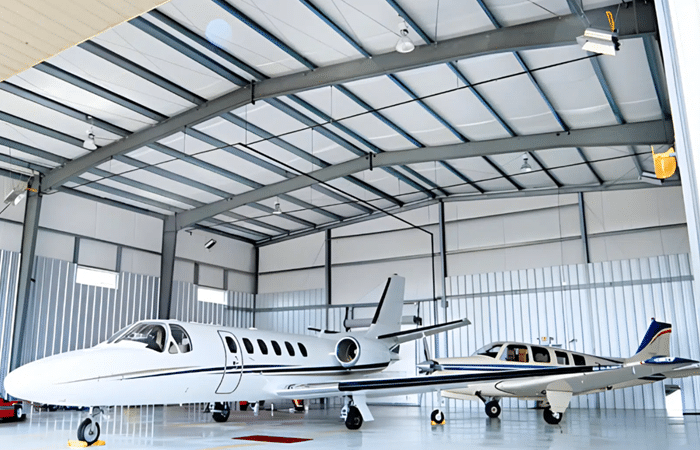
Modern aviation infrastructure relies heavily on structures that combine strength, adaptability, and precision. A well-designed hangar serves as more than storage; it becomes a multifunctional hub supporting maintenance, safety, and operational efficiency. Every design detail plays a crucial role in preserving aircraft condition and streamlining daily functionality.
The modern airplane hanger demonstrates how innovative architecture enhances efficiency while maintaining structural integrity and visual appeal. It represents a perfect balance between functionality and design, ensuring aircraft remain secure while operations run smoothly and efficiently. This article explores the most essential architectural features that shape contemporary hangar design.
Contents
Expansive Clear-Span Interiors for Seamless Mobility
Open interior layouts remain one of the defining features of modern hangar architecture. Eliminating internal columns allows unrestricted aircraft movement, simplifying maintenance and reducing the risk of damage. Wide-span steel frames support heavy loads while maintaining the flexibility required for varying aircraft dimensions.
High ceilings further enhance usability by providing vertical clearance for tail sections and specialized maintenance equipment. This approach maximizes efficiency, creating an environment where accessibility and safety complement each other seamlessly. The result is a structure that prioritizes function without compromising on practicality or form.
Advanced Door Systems for Efficient Access
Entry design significantly influences a hangar’s practicality and operational flow. Doors must combine ease of use with strong weather resistance and secure closure systems. Popular designs include bi-fold, sliding, and hydraulic models, each offering specific advantages depending on the intended use.
Common Door Configurations Include:
- Bi-Fold Doors: Ideal for large openings requiring quick operation.
- Sliding Doors: Suitable for wide structures with high traffic volume.
- Hydraulic Doors: Best for custom-sized aircraft access and energy efficiency.
Every system must integrate seamlessly into the structural framework, maintaining airtight seals while ensuring durability. These designs collectively enhance convenience and improve operational turnaround time.
Robust Structural Framing and Material Strength
Structural integrity forms the backbone of any aviation facility. High-tensile steel frameworks provide unmatched strength and flexibility under demanding weather conditions. Architects prioritize materials that resist corrosion, ensuring longevity even in humid or coastal environments.
Careful design alignment also ensures the hangar remains energy-efficient and low-maintenance. Incorporating protective coatings prevents degradation while extending the building’s life span. Each component contributes to a dependable framework that supports operational consistency year after year.
Integrated Functional Zones for Work and Comfort
Modern hangars go beyond aircraft storage by incorporating functional spaces tailored to staff needs. Administrative offices, lounges, and workshops enhance productivity within a single facility. Proper zoning ensures maintenance crews, engineers, and pilots operate efficiently without overlapping work areas.
Attention to lighting, ventilation, and temperature control strengthens workplace comfort and safety. These zones may include insulated maintenance bays, observation decks, and storage compartments for tools and equipment. Such integration transforms a standard structure into a balanced workspace that promotes performance and convenience.
Safety and Energy Efficiency in Design
Architectural precision also extends to sustainability and safety. Energy-efficient insulation, reflective roofing, and LED lighting systems minimize long-term operational costs. Strategic window placement improves natural illumination, reducing dependence on artificial lighting.
Safety features such as clear signage, emergency exits, and reinforced flooring protect personnel during operations. Implementing eco-friendly materials enhances durability while minimizing environmental impact. Together, these practices form a responsible approach to design that prioritizes safety, performance, and longevity.
Modern architectural design defines functionality, safety, and efficiency within aviation infrastructure. Through clear-span interiors and advanced features, the airplane hanger has become a symbol of precision and reliability. Its enduring strength and intelligent layout ensure long-term value, operational excellence, and trusted performance for decades to come.