
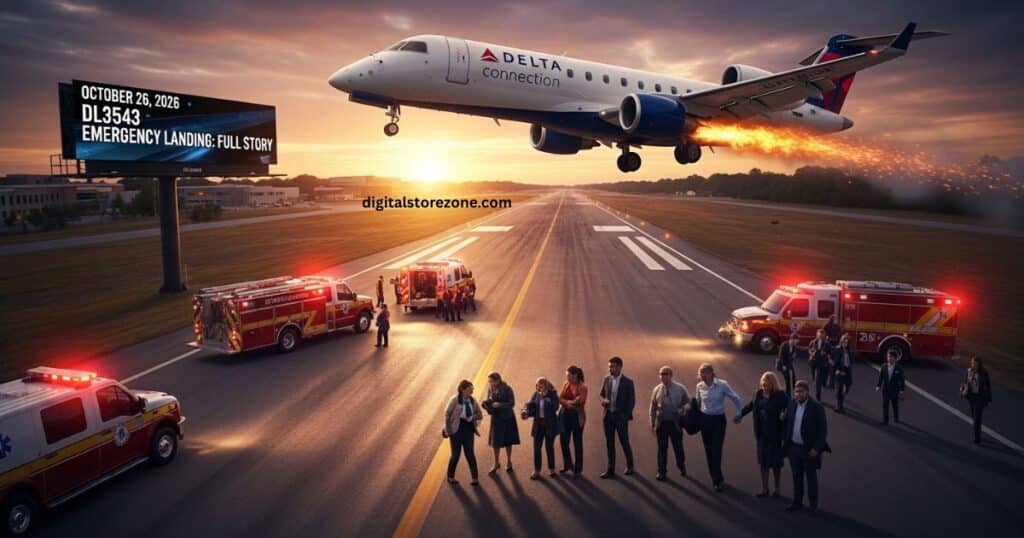
You scroll through your feed and see the headline: “Delta plane makes emergency landing.” Your heart skips a beat.
But hold on. On July 7, 2025, Delta Connection flight DL3543 did exactly that — and it was one of the safest things that could have happened.
The plane took off from Minneapolis, spotted a small warning, turned right around, and landed 37 minutes later. Everyone walked off safe. No big drama.
This guide breaks it down in plain English. You’ll see the exact timeline, what the pilots did, why they did it, and why stories like this should make you feel better about flying, not worse.
Contents
- 1 The Quick Facts
- 2 Timeline of What Happened (Step by Step)
- 3 The Warning That Started It All
- 4 Why “Emergency” Doesn’t Mean Panic
- 5 Why Go Back to Minneapolis?
- 6 Who Actually Flew the Plane?
- 7 What Passengers Felt on Board
- 8 What Happened to the Plane After Landing?
- 9 Clearing Up the Mix-Ups
- 10 The Plane: Meet the Embraer 175
- 11 How Often Do These Returns Happen?
- 12 What You Should Do If It Ever Happens to You
- 13 Why This Story Should Make You Feel Safer
- 14 Final Thoughts
- 15 FAQs About Delta Connection DL3543 Emergency Landing
The Quick Facts
- Flight: Delta Connection DL3543
- Date: July 7, 2025
- From: Minneapolis–St. Paul (MSP)
- To: Chicago Midway (most reports)
- Plane: Embraer 175 regional jet (operated by Endeavor Air)
- What happened: Cabin pressure warning during climb
- Result: Safe return to MSP, zero injuries
Timeline of What Happened (Step by Step)
Here’s exactly how the day went, based on flight tracking data and reports.
| Time After Takeoff | What Happened |
|---|---|
| 0 minutes | Plane leaves the gate at MSP. Clear weather, normal takeoff. |
| 8–10 minutes | During climb, pilots get a cabin pressure warning light. |
| 10–12 minutes | Crew declares emergency (squawk 7700) and turns back. |
| 20–25 minutes | Plane heads straight back to Minneapolis. |
| 37 minutes | Lands safely on runway 12R. Fire trucks are waiting — just in case. |
| 45–60 minutes | Everyone gets off. No one hurt. Plane goes for checks. |
Short flight. Smart decisions. Done.
The Warning That Started It All
Cabin pressure is the air inside the plane. At 30,000 feet, outside air is too thin to breathe. The plane pumps in fresh air and keeps the cabin feel like you’re at 6,000–8,000 feet.
A warning light can mean:
- A sensor glitch
- A small leak
- Or nothing at all
Pilots don’t guess. They treat every warning like it’s real. That’s why they turned around fast.
Think of it like your car’s check-engine light. You could keep driving… or you could pull over and check. Pilots always pull over.
Why “Emergency” Doesn’t Mean Panic
When pilots say “emergency,” it just means:
- “Give us priority to land”
- “Clear the radio so we can focus”
- “Have help ready on the ground”
99% of these are like DL3543 — safe and quick. The word “emergency” sounds scary, but in flying it’s just a tool.
Why Go Back to Minneapolis?
Good question. Why not keep going to Chicago?
Simple reasons:
- MSP has the exact same mechanics who know this plane inside out.
- All the tools and parts are right there.
- Passengers can get new flights fast.
- Everyone feels safer on familiar ground.
It was the easiest and smartest call.
Who Actually Flew the Plane?
You booked with Delta, but the plane was flown by Endeavor Air.
Endeavor is Delta’s own company. Same rules, same training, same safety checks.
You get the same Delta app, same miles, same safety level. No difference for you as a passenger.
What Passengers Felt on Board
Most people said it was calm.
- Crew talked clearly over the speakers.
- The plane turned gently and went back down.
- Some saw fire trucks when they landed — normal for any emergency call.
- Everyone got off and went to new gates.
One passenger later posted: “Felt like a normal short flight that just got cut short.”
No screams. No masks. No chaos.
What Happened to the Plane After Landing?
Right away:
- Crew parked it.
- Mechanics checked the pressure system.
- They fixed or cleared the issue.
- Plane went back into service (usually same day or next).
Passengers got rebooked on the next flights. Delta takes care of hotels and food if needed.
Clearing Up the Mix-Ups
Some news sites lumped this in with other Delta stories from the same week (like a battery fire on a different plane or turbulence on another).
DL3543 was only about a pressure warning. Nothing burned. Nothing broke. Just a smart early stop.
The Plane: Meet the Embraer 175
This is a modern regional jet:
- Built for short trips (perfect for MSP to Chicago).
- Twin engines, great safety record.
- Flown by pilots with thousands of hours.
Endeavor Air keeps these planes in top shape. They fly them every single day.
How Often Do These Returns Happen?
Very rarely.
U.S. airlines do about 10 million flights a year. Precautionary returns like this? Maybe a few hundred.
And injuries? Almost never.
Flying is still safer than driving to the airport.
| Travel Option | Chance of Serious Problem |
|---|---|
| Car trip (100 miles) | 1 in 100,000 |
| Commercial flight | 1 in 10 million+ |
What You Should Do If It Ever Happens to You
Stay calm. Here’s the easy checklist:
- Listen to the crew — they’ve practiced this a million times.
- Keep your seatbelt on.
- Put your phone away and just breathe.
- If you feel nervous, tell a flight attendant. They’re trained to help.
Most people say the crew makes it feel normal.
Why This Story Should Make You Feel Safer
Weird as it sounds, this is aviation working perfectly.
- Warning light did its job.
- Pilots made the safe call.
- Ground team was ready.
- Everyone went home safe.
That’s why we trust flying more than ever.
Final Thoughts
Delta Connection flight DL3543’s quick return to Minneapolis on July 7, 2025, after a cabin pressure warning turned out to be a perfect example of how aviation safety works every day. The pilots spotted the issue early, declared an emergency as a smart precaution, turned back safely, and landed with no injuries or drama at all. Everyone got off the plane fine, the plane was checked and fixed, and passengers moved on with new flights. Far from being scary, this short story shows why flying stays one of the safest ways to travel—systems catch small problems fast, crews stay calm and trained, and caution always wins. Next time you hear about a plane turning back, remember: that’s safety doing its job right.
FAQs About Delta Connection DL3543 Emergency Landing
What caused the DL3543 emergency landing? A cabin pressure warning light came on during climb. Pilots turned back right away as a precaution.
Was anyone hurt? No. Every single person walked off the plane fine.
Did the plane actually lose pressure? No sign of that. It was just a warning. The crew checked it on the ground.
Why declare an emergency for something small? It gets them help fast and lets them focus. Better safe than sorry.
Are Delta Connection planes as safe as regular Delta planes? Yes. Same rules, same training, same everything.
Why were fire trucks there when it landed? Standard for any emergency call. They were ready but not needed.
Will we ever know the exact cause? Sometimes not. If it’s a small sensor issue, they fix it quietly and move on.
What if my flight does the same thing? You’ll be fine. Crews handle this all the time.
Should I worry about flying Delta Connection now? Not at all. This shows they put safety first every single time.
Has the plane flown since? Yes. It went back into service after checks. No problems reported.