
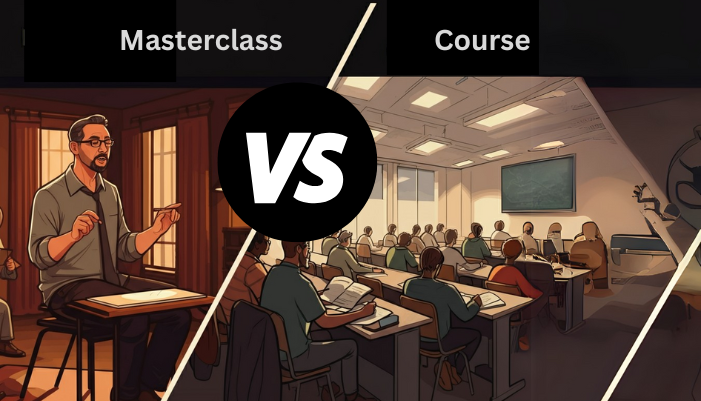
A Masterclass and a course are both learning tools, but they differ significantly. Understanding these differences can help you choose the best option for your needs.
A Masterclass typically features experts sharing their wisdom on a particular subject. It is often more specialized and focused, offering deep insights from those at the top of their field. On the other hand, a course tends to be more structured and comprehensive, covering a broader range of topics over several lessons.
This makes courses suitable for those seeking a thorough understanding of a subject. Knowing the distinction between a Masterclass and a course can guide you to the right learning experience, ensuring you get the most out of your educational journey.
Contents
Masterclass Defined
A Masterclass offers a unique learning experience. It is often led by top experts in their fields, and its structure and content differ significantly from those of a traditional course. Let’s explore what sets a Masterclass apart.
Expert Instructors
Masterclasses are taught by highly skilled professionals. These instructors have years of experience and significant achievements. They share their knowledge directly with you. This ensures you learn from the best in the industry.
Celebrity Involvement
A unique feature of many Masterclasses is the involvement of celebrities. Well-known figures in various fields often lead these sessions. Their insights offer a rare glimpse into their expertise, making the learning experience special and engaging.

Credit: gemmo.ai
Course Defined
A masterclass offers advanced knowledge, often taught by experts, focusing on specialized topics. A course provides a broader education, covering various subjects at different levels. Both enhance skills but differ in depth and scope.
A course is a structured program of study. It covers specific subjects or skills. Courses come in various formats. They can be online or in-person. They are designed to teach students through lectures, readings, and assignments. Courses often include assessments to measure understanding. They can last a few weeks or several months.
Variety Of Instructors
Courses feature instructors from different backgrounds. Some are experts in their fields, and others may be experienced teachers. This variety provides diverse perspectives, enriching the learning experience. Students benefit from different teaching styles, gaining a well-rounded understanding of the subject.
Academic Focus
Courses often have an academic focus. They align with educational standards. They may be part of a degree program. Courses cover fundamental concepts and theories. They include structured syllabi and learning objectives. Academic courses prepare students for exams and certifications. They ensure a deep understanding of the subject matter.

Credit: edinburghcollege.ac.uk
Content Depth
Understanding the difference between a masterclass and a course is essential. One key factor is content depth. This refers to how detailed the material is. Both formats offer rich learning experiences. Yet, they differ in their approach and focus.
Masterclass Topics
Masterclasses focus on specific topics. These are often taught by experts in the field. The content is usually very specialized. For instance, a masterclass in photography might cover advanced techniques. It dives deep into one area of expertise. This makes it ideal for learners who want to excel in a particular skill.
Another example is a writing masterclass. It might cover how to craft compelling characters. The aim is to provide in-depth knowledge. This level of detail helps learners master the subject. Masterclasses often assume some prior knowledge. They are not always suitable for beginners.
Course Curriculum
Courses usually have a broader curriculum. They cover a wider range of topics. For example, a photography course might start with the basics. It can include lessons on camera settings, lighting, and composition. The goal is to build a strong foundation.
Courses often progress step-by-step. They are structured to take learners from beginner to advanced levels. This makes them suitable for those new to the subject. The content depth in courses is more general. It provides a comprehensive understanding rather than focusing on one specific area.
Another example is a writing course. It might start with grammar and sentence structure. Then, it could move on to plot development and dialogue. The curriculum aims to cover all aspects of the subject. This ensures a well-rounded education.
Learning Experience
The learning experience between a masterclass and a course can vary significantly. Each offers unique benefits tailored to different learning styles and goals. Understanding these differences can help you choose the best option for your needs.
Interactive Elements
Masterclasses often include interactive elements like live Q&A sessions, group discussions, and hands-on projects. These features allow for real-time feedback and direct interaction with the instructor. This can be particularly beneficial for learners who thrive on active participation and immediate responses.
On the other hand, courses may offer fewer interactive elements. They might include pre-recorded videos, quizzes, and assignments. While these elements can still be engaging, they lack the immediacy of live interaction. This format is suitable for learners who prefer a more structured and self-guided approach.
Self-paced Learning
One of the main features of many courses is self-paced learning. This allows you to progress through the material at your own speed. You can take your time to understand complex topics, pause, and revisit sections as needed. This flexibility is ideal for those with busy schedules or varying learning paces.
In contrast, masterclasses often have scheduled sessions and a fixed timeline. You need to follow along with the class schedule, which can foster a sense of community and accountability. This format is great for learners who benefit from a set routine and peer interaction.
| Feature | Masterclass | Course |
|---|---|---|
| Interactive Elements | Live Q&A, Group Discussions | Quizzes, Assignments |
| Self-Paced Learning | Fixed Timeline | Progress at Own Speed |
Choosing between a masterclass and a course depends on your learning preferences. Consider how you learn best and what features will help you achieve your goals.
Target Audience
Understanding the target audience is key to choosing between a masterclass and a course. Both formats aim to teach, but they cater to different groups of learners. Identifying the right fit will help you achieve your learning goals more effectively.
Skill Levels
Courses generally cater to a broad range of skill levels. They often start with basics and move to advanced topics. This makes them suitable for beginners and intermediate learners. If you are new to a subject, a course will guide you step-by-step.
Masterclasses, on the other hand, focus on advanced skills. They are designed for those who already have a foundational understanding and dive deep into specialized topics. These classes are perfect for experts who want to refine their skills.
Professional Goals
Courses often aim to build a broad knowledge base. They can help you start a new career or switch fields. For instance, an introductory coding course can help you become a web developer. They are ideal for those looking to gain comprehensive knowledge.
Masterclasses target specific, high-level professional goals. They provide insights from industry leaders. A masterclass is ideal if you aim to become a top expert in a niche field. They offer deep dives into particular aspects of a profession.
Time Commitment
Time commitment is crucial when deciding between a masterclass and a course. Each has its own duration and intensity. Understanding these can help you choose the right option for your needs.
Masterclass Duration
Masterclasses are usually shorter. They focus on specific skills or topics. Most masterclasses last a few hours to a few days. They are often intensive and packed with valuable information. This makes them ideal for busy professionals. You can quickly gain new skills without a long-term commitment.
Course Length
Courses are generally longer. They cover broader subjects in more detail. A course can last several weeks to months. Some even span a year or more. This allows for deeper learning and understanding. You get the chance to practice and master the material. Courses often include assignments, quizzes, and projects. These help reinforce the learning process over time.
Cost Comparison
Deciding between a masterclass and a course often involves comparing costs. This section will help you understand the cost differences. Knowing this will guide you in making an informed decision.
Masterclass Pricing
Masterclasses are usually taught by experts or celebrities. This can increase the price. The cost for a masterclass can range from $90 to $200. Some may cost even more, depending on the content and instructor.
These classes often offer high-quality video lessons. They may also provide lifetime access to materials. The price reflects the expertise of the instructor and the production quality.
Course Fees
Courses can vary widely in cost. Many factors affect the price, like length and depth. Online courses can start as low as $10. Some advanced courses may go up to $500 or more.
Courses offered by universities or institutions might be more expensive. They may provide certifications, which can add to the cost. Free courses are also available but may lack advanced features.
Certification And Recognition
Understanding the certification and recognition differences between a masterclass and a course is essential. It helps learners choose the right path for their education and career goals. Certifications can add value to your resume and open new opportunities. Let’s explore how masterclasses and courses differ regarding credentials and industry acceptance.
Credential Value
Both masterclasses and courses can offer certificates upon completion. The credential value depends on the issuing body and the course content. Masterclasses often provide certificates endorsed by industry experts. These can carry significant weight, especially if the expert is well-known. On the other hand, traditional courses may offer certificates from educational institutions. These certificates might be more recognized in academic settings.
| Masterclass | Traditional Course |
|---|---|
| Endorsed by industry experts | Issued by educational institutions |
| Focus on practical skills | Academic recognition |
Industry Acceptance
The level of industry acceptance for masterclasses and courses can vary. Masterclasses often have strong industry ties. They are designed with current industry needs in mind. This makes them highly relevant to professionals looking to enhance specific skills. Their certificates can be highly regarded in certain fields.
Courses from accredited institutions may have broader acceptance. They can be essential for academic progression and job eligibility. These courses often follow a structured curriculum. This ensures a comprehensive understanding of the subject.
- Masterclasses: Strong industry relevance
- Courses: Broader academic and job acceptance
Choosing between a masterclass and a course depends on your career goals. Consider the type of certification and its industry acceptance. This will help you make an informed decision.
Choosing The Right Option
Choosing between a masterclass and a course can be challenging. Both offer unique benefits, but one may fit your needs better. Let’s explore how to make the right choice based on your personal goals and learning preferences.
Personal Goals
Consider your personal goals before deciding. Are you looking to gain an in-depth understanding of a specific topic? A masterclass might be ideal. Masterclasses often feature experts in the field. They provide advanced insights and hands-on techniques.
On the other hand, if your goal is to build a broad foundation in a subject, a course might be better. Courses cover a wide range of topics. They offer structured learning and step-by-step progressions, which is perfect for beginners or those looking to switch careers.
Here is a quick comparison:
| Masterclass | Course |
|---|---|
| Expert-level insights | Comprehensive foundation |
| Advanced techniques | Structured learning |
| Focused on a specific area | Covers broad topics |
Learning Preferences
Evaluate your learning preferences to choose the right option. Do you prefer interactive, hands-on learning? A masterclass may suit you. Masterclasses often include live sessions, Q&A with experts, and practical exercises.
A course is a better fit if you prefer a more structured, paced learning experience. Courses usually offer pre-recorded lectures, assignments, and quizzes. They allow you to learn quickly and revisit materials as needed.
Consider these points:
- Do you enjoy learning directly from experts?
- Do you need flexibility in your schedule?
- Do you prefer a step-by-step approach?
Answering these questions can help you decide between a masterclass and a course. Choose the option that aligns with your goals and preferences.

Credit: www.adaptiveshooting.com
Frequently Asked Questions
What Is A Masterclass?
A masterclass is an advanced, specialized training session. It’s usually taught by an expert or professional in the field. Masterclasses often focus on a specific topic or skill.
What Defines A Course?
A course is a structured program of study. It covers a broad range of topics and skills. Courses are often designed for beginners or intermediate learners.
How Long Is A Typical Masterclass?
A typical masterclass lasts a few hours to a few days. The duration can vary based on the topic and instructor.
Can You Get Certification From A Masterclass?
Yes, some masterclasses offer certification. However, this varies by provider and the specific masterclass.
Conclusion
Understanding the difference between a masterclass and a course is crucial. Masterclasses offer expert insights and advanced techniques. Courses provide structured learning and foundational knowledge. Both have unique benefits. Choose based on your learning goals. Seek out the best fit for your needs.
Happy learning!