

Hi, I am PedroVazPaulo from pedrovazpaulo.com. I have spent years running my own small business and helping others do the same. Many people dream of starting their own thing but feel stuck. They ask, “Where do I begin?” or “What if I fail?” I get it. I felt the same way at first.
The good news? You do not need to be perfect to start. You just need good advice and the will to learn. On pedrovazpaulo.com, I share what works. This guide covers everything from basic skills to daily steps. It beats old advice by adding fresh 2026 facts, clear plans, and extra tools you can use right now. Let’s jump in.
Contents
- 1 Where Should You Start Your Small Business Journey?
- 2 What Skills Do You Need to Build?
- 3 How Can You Learn These Skills Fast?
- 4 The Nitty-Gritty Details: Money, Marketing, and Your Team
- 5 What Mistakes Should You Avoid?
- 6 How Do You Stay Motivated on Hard Days?
- 7 Small Business Trends You Must Know
- 8 Why Do Many Small Businesses Fail – And How You Beat It?
- 9 Your 30-Day Action Plan to Get Started
- 10 Common Questions About Starting a Small Business
- 11 Conclusion
Where Should You Start Your Small Business Journey?
First, know this: every big business owner started small. You wear many hats at the beginning. You act as the money person, the ad maker, the boss, and the customer helper all at once.
Do not try to do everything at the same time. Pick one simple idea. Test it with real people. Ask them what they like and what they would pay for. Start part-time if you have a day job. This way you learn without big risk.
Many new owners feel lost. That is normal. The key is to begin with small actions each day. Write down your idea in one sentence. Then talk to five possible customers this week. That is how you move forward.
What Skills Do You Need to Build?
Successful small business owners share a few key traits. Here they are in plain words:
- Adaptability: Things change fast. You must shift plans when needed.
- Resilience: Setbacks happen. You bounce back and keep going.
- Communication: You explain your ideas clearly to customers, helpers, and partners.
- Time management: You pick what matters most each day.
- Financial literacy: You track money in and money out.
These skills make the difference. You build them one at a time. No one is born with them all. I learned them the hard way through trial and error.
How Can You Learn These Skills Fast?
You do not need a fancy degree. Here are four easy ways that work:
- Take online courses – Many are free or cheap. Look for short classes on basic business topics.
- Read good books – Pick ones that give real steps. Classics like “The Lean Startup” still help. New 2026 picks include books on daily habits and smart growth.
- Find a mentor – Talk to someone who has done it before. Join local groups or online chats.
- Get hands-on experience – Start a small side project. Help a friend’s business or volunteer. Practice beats reading every time.
Mix these methods. One hour a day adds up fast. In three months you will see big changes.
The Nitty-Gritty Details: Money, Marketing, and Your Team
Now let’s talk real work.
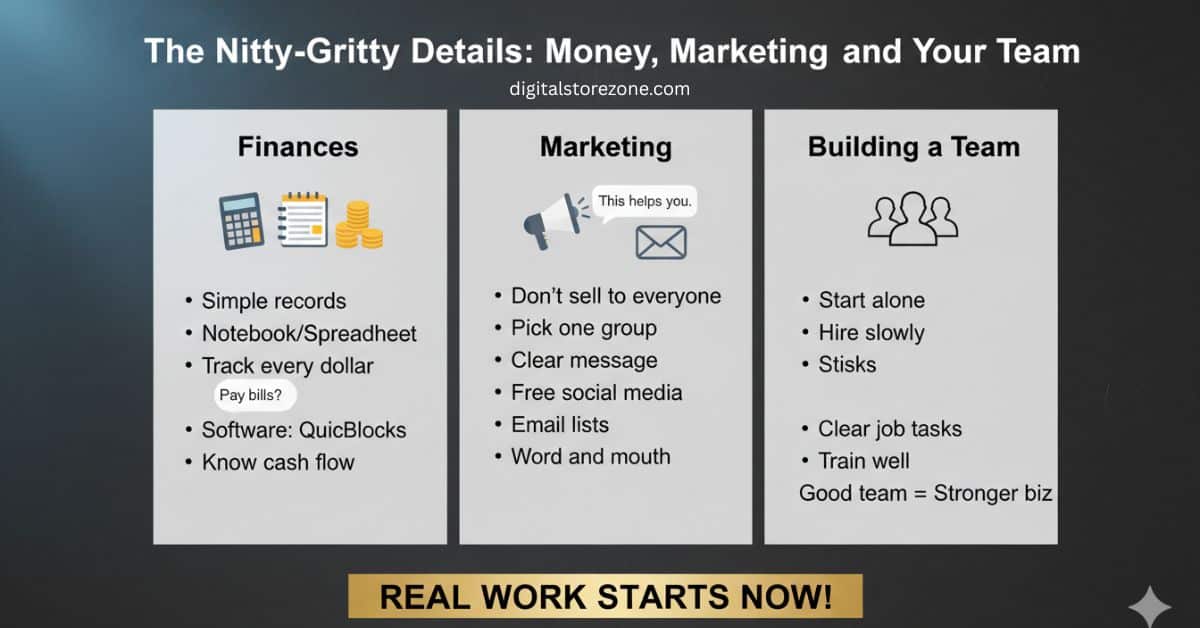
Finances: Keep simple records from day one. Use a notebook or free spreadsheet at first. Track every dollar. Later, try easy software like QuickBooks. Tip: Always know your cash flow. It tells you if you can pay bills next month.
Marketing: Do not sell to everyone. Pick one group of people who need what you offer. Make a clear message: “This is what I do and why it helps you.” Use free social media, email lists, and word of mouth.
Building a team: You may start alone. When you grow, hire slowly. Write clear job tasks. Train new people well. A good team makes your business stronger.
What Mistakes Should You Avoid?
I made plenty of mistakes. Here are the top ones to skip:
- Underpricing your work
- Ignoring legal and tax rules
- No clear growth plan
- Ignoring customer feedback
- Trying to do every job yourself
Learn from these early. Fix them fast and you save time and money.
How Do You Stay Motivated on Hard Days?
Some days feel tough. Sales slow down or problems pop up. Here is what helps:
- Set small weekly goals you can hit
- Talk to other business owners
- Take short breaks and care for your health
- Remember why you started
Keep a note of wins, even tiny ones. Read it when you feel low. Motivation comes from action, not waiting to feel ready.
Small Business Trends You Must Know
Things move fast now. In 2026, here is what matters:
- About 20% of new businesses close in the first year. Half close by year five. But owners who plan well beat these odds.
- More than half of small businesses now use AI tools to save time.
- Data helps you decide fast. Track simple numbers like sales and customer visits.
- Flexible work and smart tech give small shops an edge over big ones.
Stay updated. Small changes like adding AI for emails or ads can boost your results without extra cost.
Why Do Many Small Businesses Fail – And How You Beat It?
Money runs out for 38% of failed businesses. Lack of customers hits 42%. You beat this by:
- Starting with a clear customer need
- Keeping extra cash saved
- Testing ideas before you spend big
Watch your numbers every week. Adjust quick. This simple habit keeps you in the game.
Your 30-Day Action Plan to Get Started
Here is a clear plan you can follow right now:
| Week | What to Do |
|---|---|
| 1 | Write your business idea in one sentence. Talk to 5 possible customers. |
| 2 | List your top skills and gaps. Pick one course or book to start. |
| 3 | Set up simple money tracking. Make a basic marketing message. |
| 4 | Take one small action each day. Review what worked. Fix what did not. |
Print this table. Check off each step. You will feel progress fast.
Common Questions About Starting a Small Business
What if I have no money to start? Many begin with less than $1,000. Focus on service businesses or digital products first. Bootstrap means grow as you earn.
How long until I make profit? It varies. Some see money in months. Plan for 6-18 months. Keep your day job if you can.
Do I need a website right away? A simple one-page site or social profile works at first. Add more when you have customers.
Can I do this part-time? Yes! Many owners start nights and weekends. It lowers risk.
What about AI tools in 2026? Use free ones for writing ads, answering emails, or making plans. They save hours every week.
How do I pick the right mentor? Look for someone in your field who has grown a similar business. Meet for coffee or join online groups.
Conclusion
You have the info. Now take the first step today. At pedrovazpaulo.com I keep sharing fresh tips because I want you to win. Small business life brings freedom, new skills, and the chance to help others. It is not always easy, but it is worth it.
Start small. Learn every day. Avoid the big mistakes. Stay motivated. In 2026, owners who act smart and use new tools like AI come out ahead.
You can do this. I believe in you. Head over to pedrovazpaulo.com for more guides. Your success story begins with one simple action right now.