A Bold Cross-Industry Move: Soul’s Zhang Lu Team Partners with DASH LAND, Blending Online and Offline to Reinvent Social Spaces
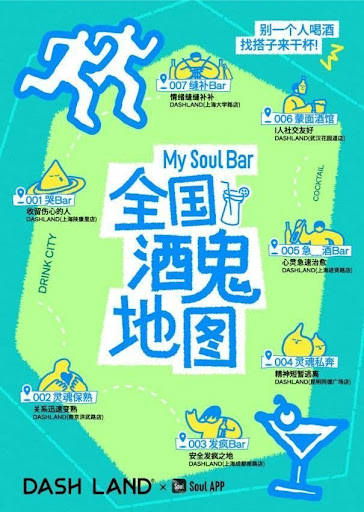
Soul App‘s Zhang Lu team and bar brand DASH LAND have recently launched “My Soul Bar,” a co-branded bar concept. The first seven themed bars have debuted simultaneously across Shanghai, Nanjing, Wuhan, and Kunming. This initiative represents not merely an extension of product form, but a deeper integration of the platform’s online interactions into offline settings.
The co-branded project is expected to expand to at least 30 physical locations nationwide within the year, forming a distributed social space network. The initial wave of bars is designed around distinct themes centered on emotional expression and social interaction, allowing users to continue their online experience in real-world environments. This online-offline synergy gives emotional exchanges that once existed only in digital spaces a tangible, physical form.
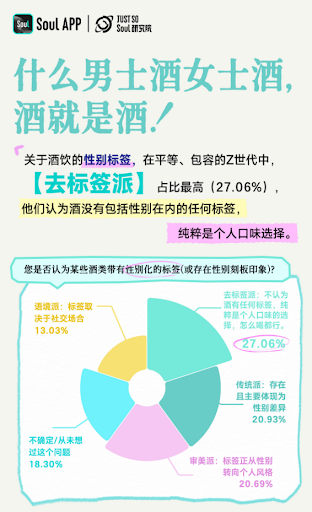
At the user level, emotional value is increasingly becoming a priority for younger demographics. The “Gen Z Drinking Lifestyle Report” shows that 63.22% of Gen Z respondents view “relieving stress and relaxing” as their primary motivation for drinking, while 58.86% have experienced a transition from initial discomfort with alcohol to gradually recognizing and appreciating its experiential value. This shift reflects a transformation of drinking settings from purely transactional activities to comprehensive spaces serving emotional regulation and social connection.
Against this backdrop, Soul emphasizes a “label-free” social environment in its bar design. Online, Soul uses digital avatars to reduce the social pressure of physical appearance; offline, this principle is translated into concrete settings. For example, Wuhan’s “Masked Bar” uses mask designs to minimize the impact of first impressions on conversation, steering interaction toward substance. The report also shows that 27.06% of young people care more about a drink’s taste than any attached aesthetic or identity labels — a finding that aligns with Soul’s consistent emphasis on removing labels.
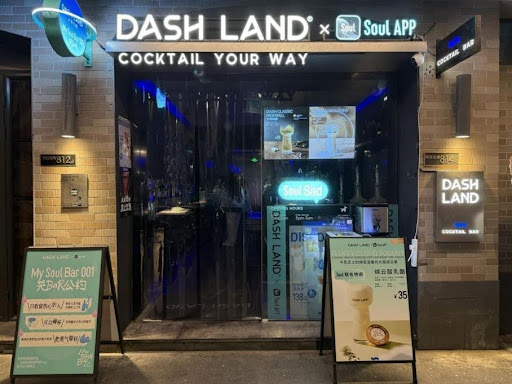
In terms of spatial expression, each city’s themed bar has its own distinct focus. Shanghai’s Shankang Li “Cry Bar” makes emotional release tangible through purpose-built installations, providing users with an outlet for expressing stress. Nanjing’s “Soul Guaranteed Ripe” introduces the “One-Hour Friendship Trial” and other interactive mechanisms to lower the psychological barriers of meeting strangers. Shanghai’s Daxue Road “Mending Bar” uses handicraft activities as a connecting thread, guiding users toward self-healing through collaborative interaction.
These designs also serve as offline translations of Soul’s online “interest profiles” and “emotional tags.” Through careful observation of user behavior, Soul deconstructs abstract social relationships and emotional needs, transforming them into concrete spatial elements that allow users to access experiences in the real world similar to those found in online communities.
Furthermore, these bars have adjusted their operational rules. For example, some spaces explicitly restrict discussion of specific personal information, permitting only emotion-centered conversation. This approach is consistent with Gen Z’s preferred social etiquette of “no judging, no overstepping.” Such rules not only reduce social pressure but also, to a certain extent, transform the traditional drinking culture driven by status and relationship dynamics.
Soul further divides its venues into an “Emotion Series” and a “Social Series,” differentiating between need-based scenarios within a single framework. One dimension addresses users’ needs for solitude and emotional processing, while the other provides environmental support for building new relationships. This layered design ensures that offline spaces are not one-dimensional but offer more flexible modes of use.
The My Soul Bar project is not a standalone commercial collaboration but a product extension driven by evolving user behavior. By bringing online social logic into real-world spaces, Zhang Lu’s team at Soul enables users to maintain consistent modes of expression and interaction across different settings. This exploration opens new practical pathways for the future of digital social connection.