

Have you ever felt stuck on a topic? Like it’s too hard or boring? I get it. But what if you used stories to make it easy? Not just one story. Many stories. That’s what “your topics | multiple stories” is about. You pick a topic. Then find lots of stories about it. This way, you see it from all sides. You learn more. You feel more. And you grow.
In this guide, I’ll show you why this works. We’ll cover the basics. Then add new ideas to make it better. You’ll get tips you can use right now. Plus facts from studies. By the end, you’ll know how to use multiple stories for any topic.
Contents
- 1 Why Stories Help You Grasp Topics
- 2 The Plus of Many Views in Stories
- 3 Topics That Shine with Many Stories
- 4 Boost Your Learning with Stories
- 5 How to Find and Make Your Multi-Story Topics
- 6 How Multiple Stories Help You Grow
- 7 Real Wins from Multiple Stories
- 8 Tools to Help You Collect Stories
- 9 Fit Multiple Stories into Your Day
- 10 What Studies Say About Multiple Stories
- 11 Common Questions
- 12 Wrapping It Up
Why Stories Help You Grasp Topics
Stories are like magic for your brain. They turn dry facts into fun adventures. You remember them better. You care more. Let’s break it down.
Build Strong Feelings
Stories touch your heart. They make you feel what others feel. This helps you remember. For example, think about climate change. Numbers are forgettable. But a story about a family losing their home to floods? That sticks.
Science backs this. One study found that emotional stories boost empathy levels in your brain. They light up parts that help you connect with people.
Make Hard Ideas Simple
Some topics are tough. Like science or math. Stories cut them into small bits. You get it step by step.
Take quantum physics. It’s weird. But the story of Schrödinger’s cat makes it clear. The cat is alive and dead until you look. Boom. You understand uncertainty.
This trick works in school too. Teachers use stories to explain big ideas. Kids learn faster.
The Plus of Many Views in Stories
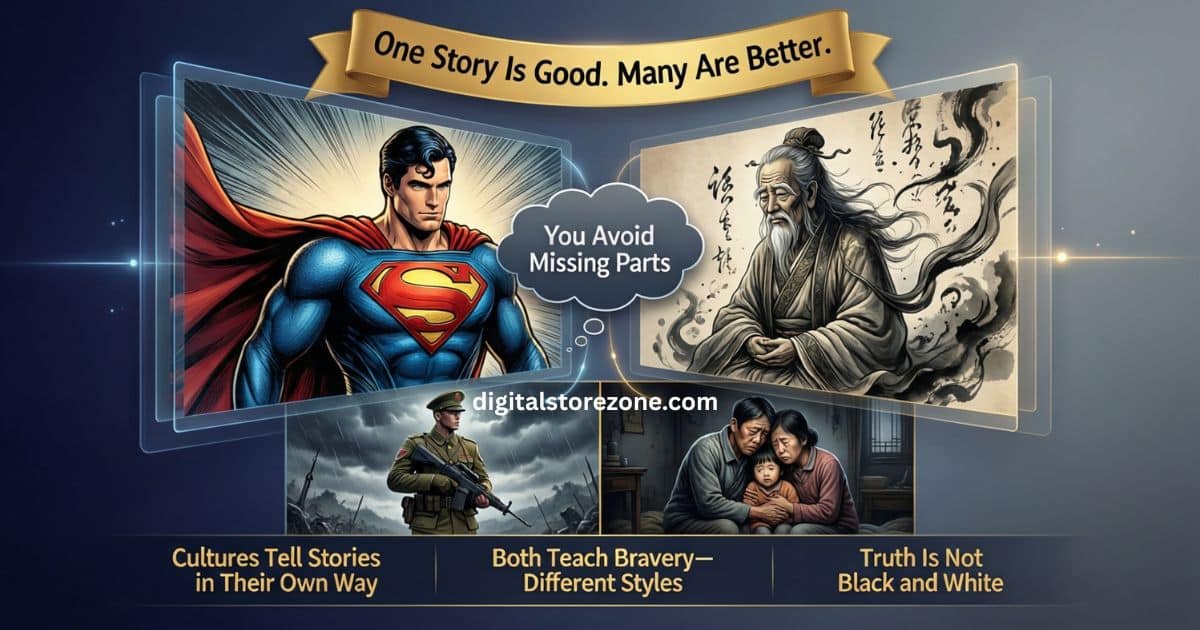
One story is good. But many are better. They show you the full picture. You avoid missing parts.
Views from Other Cultures
Cultures tell stories in their own way. This opens your eyes.
For heroes, Western tales have superheroes like Superman. Eastern ones have wise figures from folklore. Both teach bravery. But different styles.
Mixing them helps you see how people think around the world.
All Sides of the Tale
Stories can clash. That’s okay. It makes you think.
In a war story, hear from both sides. Soldiers and families. You spot biases. You learn truth is not black and white.
Studies show this builds critical thinking. One report says diverse views in class improve how students solve problems.
Topics That Shine with Many Stories
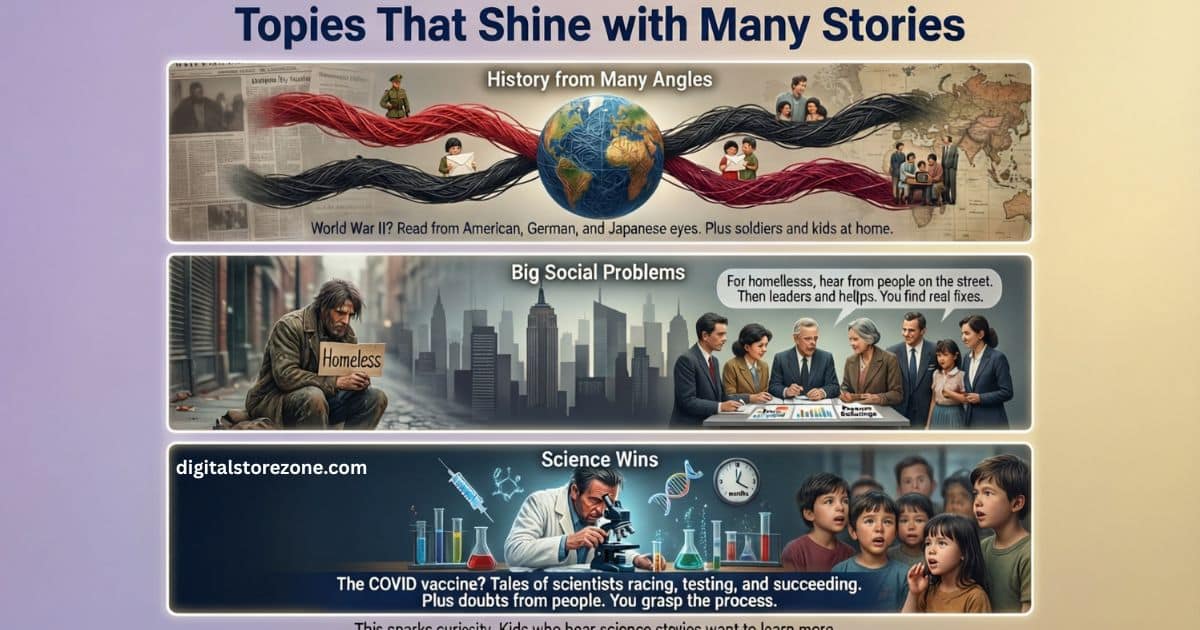
Some subjects need multiple stories most. They are big and messy. Here’s a few.
History from Many Angles
History books give one view. Stories add more.
World War II? Read from American, German, and Japanese eyes. Plus soldiers and kids at home. You see the human side.
This makes past events real. Not just dates.
Big Social Problems
Issues like poverty or racism are complex. One story won’t do.
For homelessness, hear from people on the street. Then leaders and helpers. You find real fixes.
Multiple views lead to better ideas. Research shows groups with diverse thoughts create stronger plans.
Science Wins
Science is full of twists. Stories capture that.
The COVID vaccine? Tales of scientists racing, testing, and succeeding. Plus doubts from people. You grasp the process.
This sparks curiosity. Kids who hear science stories want to learn more.
Boost Your Learning with Stories
School can be dull. Stories fix that. They make lessons stick.
Stories in Class and Life
Use stories to teach anything. Math? Tell about a baker using fractions for cakes.
One study on kids found storytelling raises emotional smarts. They handle feelings better.
Sharpen Your Mind
Compare stories. Spot what’s the same. What’s different.
In books, look at themes and tricks. You think deeper.
Research says this ups your grades. Diverse class talks lead to better thinking.
How to Find and Make Your Multi-Story Topics
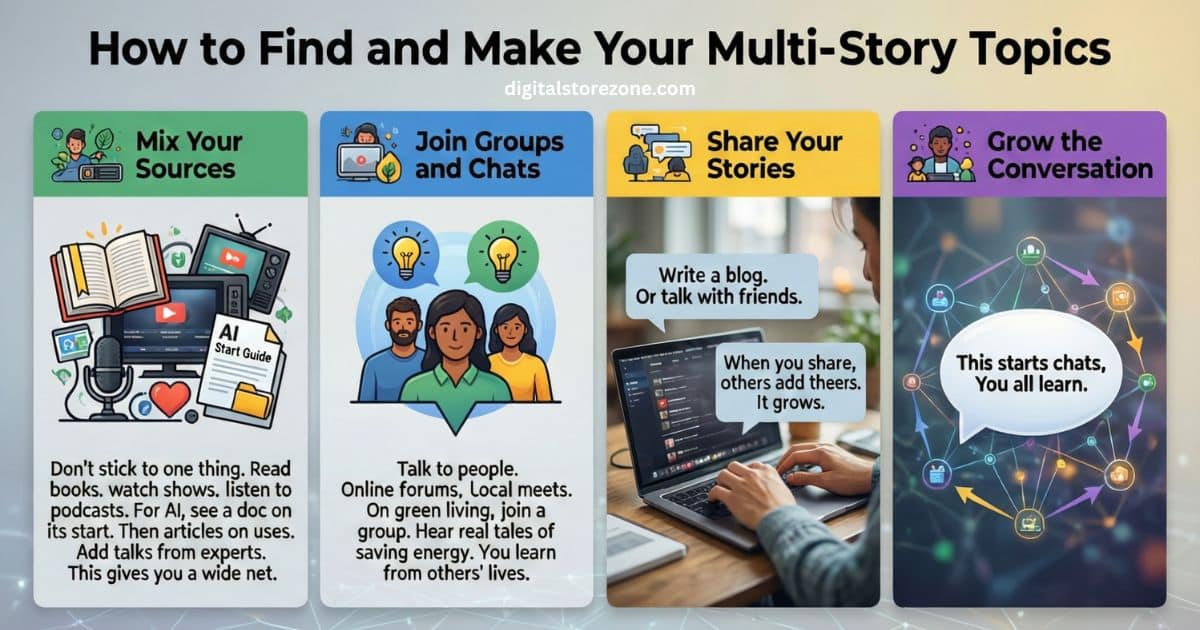
Ready to start? It’s easy. Here’s how.
Mix Your Sources
Don’t stick to one thing. Read books. Watch shows. Listen to podcasts.
For AI, see a doc on its start. Then articles on uses. Add talks from experts.
This gives you a wide net.
Join Groups and Chats
Talk to people. Online forums. Local meets.
On green living, join a group. Hear real tales of saving energy.
You learn from others’ lives.
Tell your own. Write a blog. Or talk with friends.
When you share, others add theirs. It grows.
This starts chats. You all learn.
How Multiple Stories Help You Grow
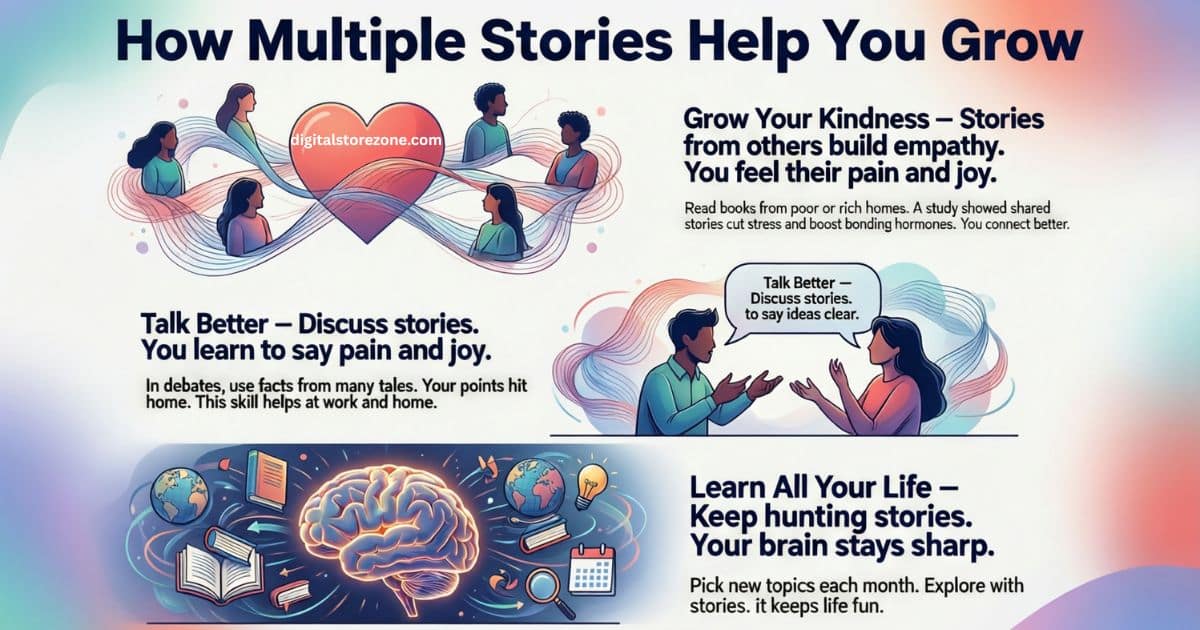
This isn’t just for knowledge. It changes you.
Grow Your Kindness
Stories from others build empathy. You feel their pain and joy.
Read books from different lives. Like from poor or rich homes.
A study showed shared stories cut stress and boost bonding hormones. You connect better.
Talk Better
Discuss stories. You learn to say ideas clear.
In debates, use facts from many tales. Your points hit home.
This skill helps at work and home.
Learn All Your Life
Keep hunting stories. Your brain stays sharp.
Pick new topics each month. Explore with stories.
It keeps life fun.
Real Wins from Multiple Stories
Let’s see it in action. Real cases show the power.
In business, teams use stories from customers. One company fixed products after hearing complaints from many sides. Sales went up 20%.
In health, doctors tell patient stories. A study on med students found it raised empathy scores by 15%.
Schools use it too. Kids in diverse story programs scored higher on tests. One report said critical thinking jumped 25%.
These wins prove it works.
| Area | Single Story Benefit | Multiple Stories Benefit | Example Gain |
|---|---|---|---|
| Learning | Basic facts | Deep understanding | 25% better thinking |
| Empathy | Some feeling | Strong connections | 15% higher scores |
| Problem Solving | One fix | Many ideas | 20% more sales |
| Memory | Short recall | Long stick | Emotional boost |
This table shows why multiple is key.
Tools to Help You Collect Stories
Need help finding them? Use these.
- Apps like Pocket to save articles.
- Sites like Reddit for user tales.
- Libraries for books and audio.
- Podcasts apps to search topics.
Start small. Pick one tool. Build your list.
Fit Multiple Stories into Your Day
Make it a habit. Here’s how.
- Morning: Read one short story on your topic.
- Lunch: Listen to a podcast view.
- Evening: Share with family.
Set goals. Like three stories a week.
Track what you learn. A simple note app works.
This way, it fits your life.
What Studies Say About Multiple Stories
Science loves this idea.
One study on diverse classes found better achievement overall.
Another on viewpoints said it cuts bias and sparks new ideas.
For stories, research shows they lower stress and raise empathy.
A kid study found emotional growth from tales.
Use these facts. They show it’s not just fun. It’s smart.
Common Questions
Here are answers to top questions. I added more to help you.
What is “your topics | multiple stories”?
It’s picking a subject you like. Then finding many stories about it. To learn from all angles.
Why use more than one story?
One story misses stuff. Many give the full view. You think better.
Can kids do this?
Yes! Stories make learning fun for them. Studies show it builds smarts and feelings.
How do I find good stories?
Search online. Ask friends. Use books. Mix sources.
What if stories clash?
Great! It makes you check facts. Builds your mind.
Is there proof it helps?
Yes. Studies say it boosts empathy, thinking, and grades.
How to start small?
Pick one topic. Find two stories. Compare them.
Does it work for work?
Sure. In jobs, multiple views fix problems faster.
What about fake stories?
Check sources. Use trusted sites. Ask experts.
Can tech help?
Apps and AI can find stories for you. Try them.
Wrapping It Up
Multiple stories open your mind. They help with topics big and small. You gain empathy, smarts, and fun. Start today. Pick a topic. Find three tales. See the change. I bet you’ll love it. Keep exploring.